



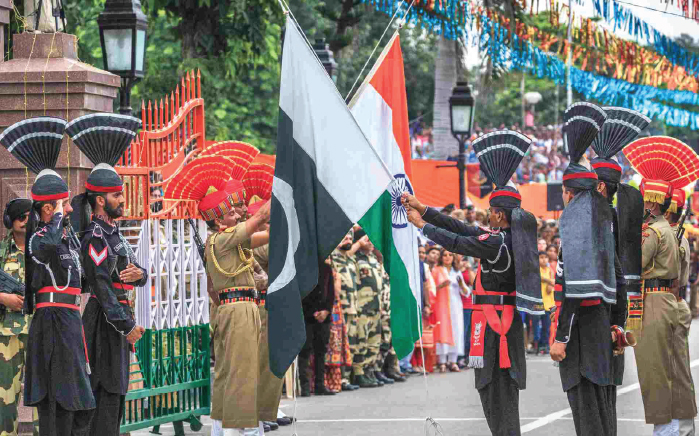
Some recent developments have kindled hopes for a peace process to begin between India and Pakistan. While the dividends from such a process would be enormous, there are formidable obstacles to overcome. Internal political dynamics on both sides play an important role and there are some hopes for a better future.
Let us look at some of the positives of a peace process. Restoration of trade would be a huge gain for both sides. The recent initiative to allow import of sugar and cotton from India into Pakistan could not fructify. It would have benefited economic actors on both sides. Going further, normalizing trade relations would benefit stakeholders on both sides, and lead to positive economic gains for both countries. This is an effort well worth pursuing. It could lead to a stronger constituency for peace on both sides and lead to further economic linkages such as investment flows and transportation links.
There are a number of problems on which both countries need to work together and tackle. The Covid-19 pandemic and disease control is an important area. Both sides could benefit from cooperation in disease surveillance, vaccines and therapeutics, medical equipment, medical research, health manpower development and medical emergency relief. Common patterns of communicable and non-communicable diseases are discernable. Such cooperation could be of great benefit to the people in both countries. Similarly, cooperation on control of plant and animal diseases and pests that affect agriculture and animal husbandry in both countries could be beneficial.
Both countries suffer from the effects of persistent chemicals in water, food and the environment. A common effort to monitor and mitigate the impact of these could be beneficial for the health and well-being of people on both sides.
Both countries need to step up efforts to fight climate change and protect the environment. Power grid linkages could benefit both sides and alleviate power shortages and brownouts. There is a good scope to work together to monitor and combat air pollution, especially during the winter season when the northern part of the subcontinent suffers. Renewable energy cooperation offers both countries a way to reduce emissions and the burden of imported fossil fuels.
 The political and security aspect of bilateral relations has tended to dominate the relationship. It needs to be rebalanced in favour of greater emphasis on other dimensions that have good potential to deliver positive outcomes and build confidence and trust. In this way, space can be made to enable exploration of creative solutions to long-standing and seemingly intractable problems. A genuine Track 2 (non-governmental) dialogue can be a useful mechanism that permits participants on both sides to freely discuss and explore nontraditional and creative approaches. Think tanks can play an important role in this process, provided both governments recognize the value of such interactions.

Dr. Bhaskar Balakrishnan has been an Indian diplomat from 1974-2007 and served as ambassador of India to Greece, Cuba, Haiti and the Dominican Republic, and has worked in Sudan, Syria, Zambia, and Austria. He can be reached at b.balakrishnan@ris.org.in |
|
Cover Story
|
|
News Buzz
|
Update |
Leave a Reply