


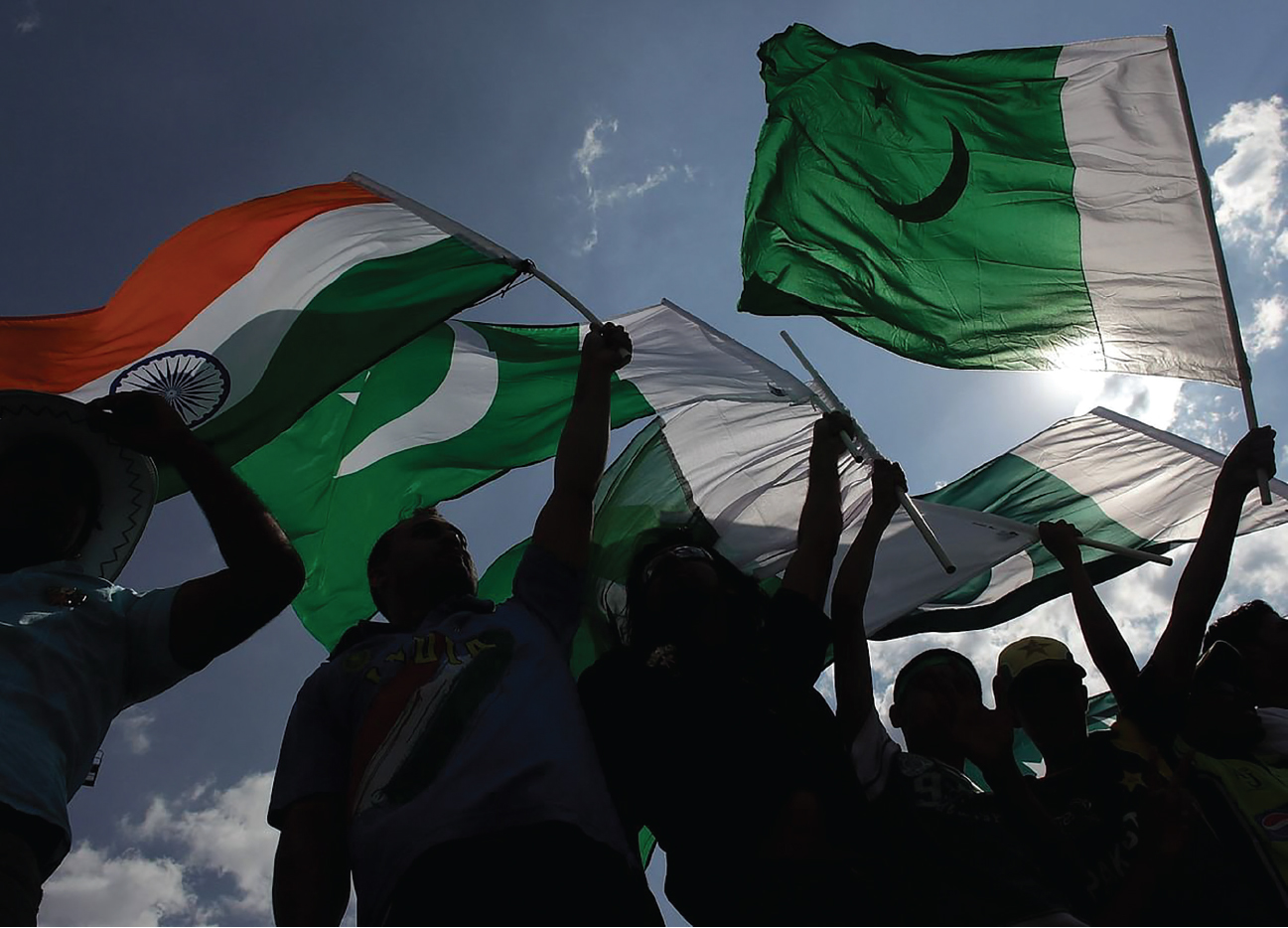
Whenever two neighbouring states with strong political and military standoff, acquire nuclear capabilities with effective delivery means, the entire gambit of diplomacy and warfare changes. Nuclear parity (that exists between Pakistan and India) if properly understood by political and military leaderships, nearly precludes nuclear war as well as conventional military operations. This automatically pushes the conflict in the political, diplomatic, psychological and economic zones. The danger of overt suicidal conflagration, institutes deterrence, but may give space to other types of warfare, falling in the ambit of Hybrid War or Low Intensity Conflict (LIC) definition. But it has to be understood that if the pain threshold of the opponent is crossed, LIC can escalate and lead to dangerous and unthinkable overt operations. If these facts can sink in the minds of both groups of decision-makers and trouble-makers, they would realize that India and Pakistan have no option but to change their attitudes from adversarial to cooperation mode.
Without going into the lengthy discussion of the reasons of deep-rooted mistrust and adversarial nature of Indo-Pak relations, the conclusions could be simplified to dump it on ‘history’, ‘unresolved issues’ and ‘absence of will at politico-military’ levels of both countries. Also, there are enough indicators that some ‘other players’, due to their own political and economic interests, are not very keen to see a rapprochement or détente in the relationship of these two neighbours in the subcontinent.
Organizing Kulbubshan type networks, disinformation campaigns revealed by the EU Disinformation Lab and Indian adversarial actions revealed by our New Folder, do not auger well in the already deteriorated relationships. Continued atrocities in IIOK are further vitiating the entire environment. If India is really interested in building up trust in the region and work for an economically and politically integrated bloc, then it must resolve irritants and serious political and territorial issues with all its neighbours. For that, serious efforts will have to be made by all involved parties. In this article we shall concentrate on Indo-Pak detente only, though the situation is entangled with the rivalry of Great Players but we need to break away from that and concentrate on mutual interests. Indian growing Strategic Relations with the US, including the intended cooperation in managing Indo-Pacific Region, vis a vis Pakistan’s pursuance of CPEC as an important component of the Chinese Belt and Road Initiative, further hardens the adversarial sentiments in the two neighbours.
Now, under the prevailing environment, where do we go? How do we get a fresh start? Ceasefire along the Line of Control and Prime Minister Imran Khan’s offer to start the dialogue with a certain precondition, amply supported by COAS Gen Qamar Bajwa, could have been a good starting point. I propose moving from easier to difficult. First let us try to get out of the groove of past history of animosity and concentrate on the present sticking issues. Who did what to whom? Which grand empire was more grand in expanse and administration, Hindu, Muslim or Sikh? What conditions led to the partition of the subcontinent, etc., etc? The matter of fact is that India and Pakistan are two separate nation-states, and both have the ability to do very well in the comity of nations. Both countries are very well recognised the world over with memberships of all significant international and regional organizations and forums. Unfortunately both neighbours are afflicted with poverty, illiteracy, social and economic injustices and bad governance, to varying degrees. Social indicators are dismal and whatever resources have been developed, a major chunk of those are being wasted in continued useless confrontation.


The writer is a former Minister of Defence and former Secretary of Defence. He can be reached at naeemlodhi53@gmail.com |
|
Cover Story
|
|
News Buzz
|
Update |
Leave a Reply