
Colombo
Seats without Substance
The next local elections in Sri Lanka risk repeating the same story: more women in seats, but few in charge

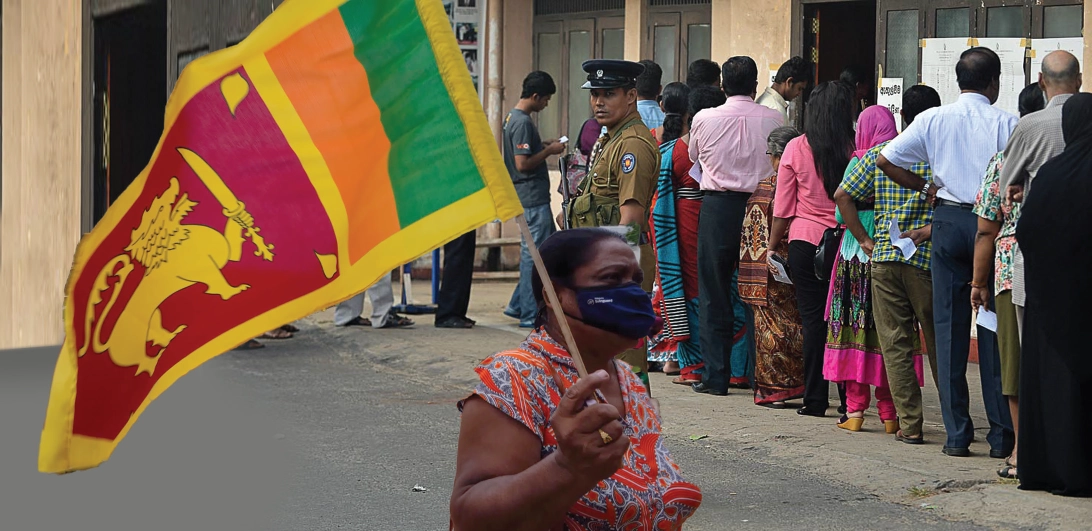
Sri Lanka’s legal architecture appears progressive on paper: since 2017, a law has guaranteed that 25 percent of seats in local government be reserved for women. However, the headline figure masks a persistent reality: the quota increases women’s numerical presence without guaranteeing them a voice, authority, or independent power. The forthcoming local authority elections have made that gap visible again: parties, legal loopholes, and a hostile information environment combine to blunt the quota’s intended effect, leaving many women in symbolic roles while the levers of decision-making remain male-dominated.
The quota has shifted the arithmetic at the local level: women’s representation in local government increased after the 2017 amendment, and official figures still indicate higher female participation at the municipal level than in the provincial or national legislatures. Yet, national bodies remain stubbornly male: parliamentary representation has been in the single digits for much of the last decade, and has improved only modestly in recent cycles, underscoring that gains at the municipal level have not translated into parity at higher levels.
Three interlocking mechanisms explain why the quota has often been a cosmetic fix rather than a vehicle for empowerment.
Party gatekeeping and candidate placement
Political parties control nominations and list order, and where they treat the quota as a procedural checkbox, they frequently place women on low-priority proportional lists or in unwinnable wards. The result is more women on ballots and even in councils, but not in positions where they can set agendas, chair committees, or manage budgets. In other words, seats without substance. Civil-society reporting and local investigative pieces in 2025 documented repeated cases where women were effectively nominated to preserve party optics rather than to lead.
Legal loopholes and implementation gaps
The Local Authorities Elections framework contains provisions, in particular a clause widely discussed as Section 65AA, that allow parties or lists to escape full compliance when they win fewer than a threshold number of seats or votes. That exemption has been deployed as a practical workaround, enabling male-dominated parties to minimize the quota’s reach without formally breaking the law. The problem is not only the letter of the law but weak, reactive enforcement: when the regulatory architecture permits selective application, numerical targets become fragile.
Social norms, unpaid care burdens, and the campaign environment
Beyond rules and procedures, everyday reality skews political opportunity. Women candidates shoulder disproportionate unpaid care burdens, face mobility and ‘respectability’ constraints during campaigning, and often lack the informal patronage networks that fund and sustain competitive runs. Even when elected, female councillors report being sidelined in committee appointments and budget decisions; their proposals are regularly dismissed, a pattern that reproduces a gendered division of political labour. Surveys and a recent literature review reinforce the notion that societal expectations hinder the pipeline of viable female candidates.
Online gendered abuse compounds structural hurdles
Regional surveys and parliamentary monitoring show a high incidence of hate speech, doxing, image-based abuse, and coordinated disinformation directed at women officeholders and aspirants. Such attacks are not abstract: they deter new entrants, exhaust incumbents, and weaponize reputational risk to push women out of public life. In a country where online spaces are central to campaigning, the threat of digital violence poses a practical barrier to both running for office and governing. With fresh elections on the horizon, several worrying trends have emerged.
Tactical resistance by party elites
Reports from 2025 indicate that party leaders are quietly downgrading women on lists, selectively deploying the legal exemption, or nominating proxies who lack independent authority. These are overtly tactical moves to preserve male control of local institutions while obeying the quota’s formal requirements.
Uneven application across councils
Early returns and watchdog reporting indicate that some local councils now have no women at all, while others meet or exceed targets; this variance highlights how enforcement and local party practices determine real outcomes more than the law itself. Recent counts indicate a rising number of councils without any female members compared with previous cycles, a signal that the quota’s gains are fragile and reversible.
The mixed electoral system’s blind spot
Sixty percent of local seats are filled via direct ward contests and 40 percent via proportional lists. The quota is easier to operationalize on PR lists; ward contests, however, remain overwhelmingly male-dominated territory. Without rules that mandate women be placed in winnable wards or front-loaded on PR lists, the quota’s impact is skewed towards nominal representation.
The evidence suggests that the law must be paired with enforcement, incentives, and protection mechanisms to convert seats into power. Close legal loopholes and strengthen enforcement. Amendments or interpretative clarifications that remove exemptionary language (the clause identified in 2025 reporting) are essential. The Election Commission should be required to publish audit-ready candidate lists and seat allocations well in advance of polling, with independent oversight and fast-track dispute resolution in place for parties that flout the rules.
Regulate list order and candidate placement
Mandating a minimum share of women in top positions on proportional lists and requiring parties to place women in a set percentage of winnable wards are proven mechanisms in other quota systems for increasing the number of women in elected office. Internal party rules would shift the burden from women to parties.
Fund, train, and protect women candidates
Targeted public financing for female candidates, sustained training in campaigning and media handling, and rapid-response legal and digital-safety teams to counter online abuse would reduce structural disadvantages and the chilling effect of harassment. International partners and local NGOs have template programs that can be scaled and institutionalized.
Sanctions for gendered political abuse
Clear, enforceable penalties for smear campaigns, doxing, and gendered threats would raise the cost of delegitimizing women’s participation and protect reputations that are often weaponized. The state and electoral authorities must move more quickly to prosecute and publicize sanctions to deter repeat offenses. Measure impact, not only numbers. Public, periodic reporting should track substantive indicators so accountability shifts from “seat filled” to “seat used.” Independent research and civil society monitoring can partner with the Election Commission to publish these metrics after each election cycle.
Sri Lanka has shown that laws can open doors, but let’s be honest, changing paper doesn’t change patriarchy. Deep-rooted party hierarchies, societal pressures, and a rising tide of online abuse still keep women from stepping fully into power. The 25 percent quota isn’t just a number; it’s a promise, one that will only matter if the government, political parties, and civil society actually work together. That means enforcing the law, promoting women to positions of leadership, and protecting them from harassment, both online and in real life. Without that, the next local elections risk repeating the same story we’ve seen too many times: more women in seats, but few in charge. The question isn’t whether quotas are necessary—it’s whether Sri Lanka is ready to make them work, truly.
Based in Lahore, the writer is a Ph.D. scholar and political analyst. She can be reached at gulnaznawaz1551@gmail.com


Leave a Reply