
Cover Story
Multiple Dimensions
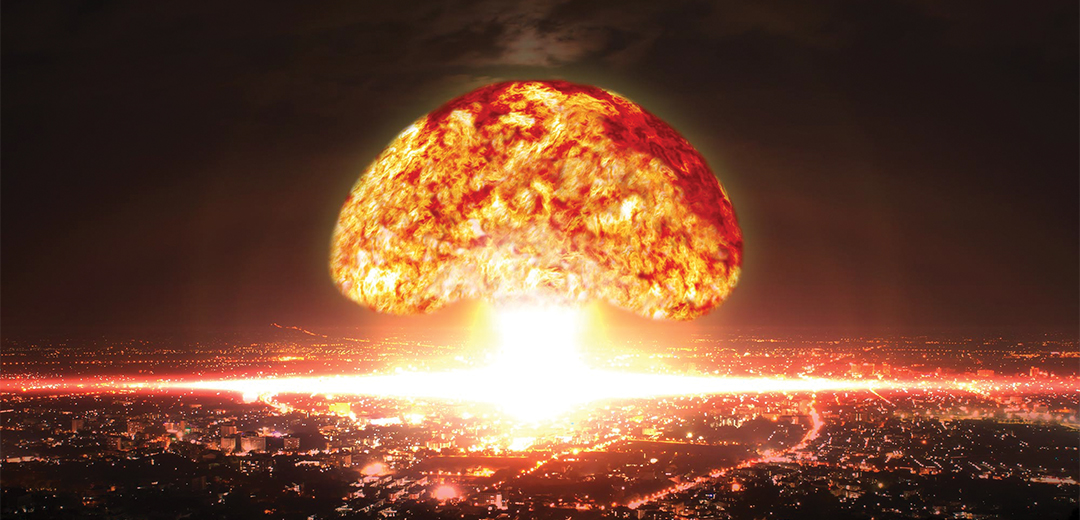
While Kashmir is the central issue, Pakistan and India must give equal attention to the nuclear weapons that both nations possess and the catastrophies this demension could bring.

Credible reports in April 2021 that secret back-channel talks between officials of intelligence agencies of Pakistan and India commenced in recent months indicate scope for later policy-level dialogue at the Foreign Ministers’ level. They also stimulate reflections on two subjects of paramount importance for both countries: Kashmir and Nuclear Weapons.
The supreme commonality between the two subjects is that both have a pivotal role in shaping bilateral relations. Kashmir has been so for over 73 years. Nuclear weapons have become especially so for the past 33 years when both countries became declared nuclear weapon powers in 1998. It is widely believed and stated that a crisis in one could lead to the catastrophic use of the other.
These two concerns also share an equally basic commonality : that of being irreducible. In Pakistan, Kashmir has been referred to as the jugular vein to stress the thesis that, without all of Muslim-dominant Kashmir, Pakistan remains incomplete. And nuclear weapons are regarded as the indispensable, non-negotiable guarantee for the survival of the state.
But where there is abundant public discourse on Kashmir, there is virtual silence on the multiple dimensions and details about nuclear weapons. Illiteracy about nuclear weapons is far higher than print illiteracy.
Kashmir is about the right of self-determination of at least 8 million Muslims and it is about a territory whose disputed status is encoded in Resolutions of the UN Security Council. Four wars have been fought in which three have been principally about Kashmir and even the fourth --- 1971 --- did also eventually affect Kashmir, as per the 1972 Simla Agreement which, among other aspects, converted the Ceasefire Line into the Line of Control. While the recent cessation of daily firing and bloodshed on both sides of the LoC is a welcome development, the rash actions of the Indian Government on changing Kashmir’s status in 2018 ensure that the fuse continues to burn.
Though there is an intrinsically territorial dimension in the close juxtaposition of two nuclear powers, the subject of nuclear weapons transcends territory. As two out of only nine nation states in the 193-membership of the UN that are declared nuclear weapon powers --- USA, China, Russia, UK, France, North Korea being the other six declared powers, (and Israel being the undeclared seventh) --- the two South Asian nuclear armed countries possess a global significance which transcends territory and region. A powerful exposition of the all-embracing, all-pervasive nature of nuclear weapons is that the entire planet and all of humanity comprising seven and a half billion people have a direct interest. They are potential victims of a nuclear conflagration between any two states, be they immediate neighbours or be they distant from each other.

Does the record of past conduct of both nations on these two subjects offer hope for the future? Or are we bound to always remain on the edge of another possible war and worse, the abyss of nuclear war?
India’s covert and overt role in precipitating the disintegration of Pakistan in 1971 will never be forgotten. Nor can India’s instinctive hegemonistic tendencies be ignored. Caution and vigilance have to be constants even as attempts are made to improve relations.
Despite the four wars, both states have demonstrated notable restraint in certain important respects. First: almost all significant treaties and agreements have stayed intact. From the Indus Waters Treaty of 1960 to the December 1988 Accord by which both states annually exchange lists of their respective nuclear installations and reiterate their pledge not to attack nuclear installations in cases of armed conflict --- such pacts have survived severe strains.
Second: except in 1971, diplomatic relations have been maintained even when High Commissioners have been recalled, as at present.
Third: except for relatively brief phases of war, and since the 2018 attempt to mutilate the status of Jammu & Kashmir, trade has continued --- heavily in favour of India. For instance, up to about 2018, Pakistan imported approximately US 1.2 billion of Indian commodities and products while Pakistan exported about US$ 400 million of its own items. (One of the major reasons for this imbalance was the application of non-tariff barriers by India to curb imports from Pakistan).
Fourth: during all four wars, both sides did not bomb or target civil population centres. They confined attacks principally to military targets. Civilian casualties were incidental, not deliberate. Except for the normal / abnormal shelling of civilians in Azad Kashmir by Indian forces across the LoC between periodic ceasefires.
Fifth: in summary, the two adversaries have practiced controlled, graded escalation in the use of force against each other, always stopping short of reaching a point-of-no-return.
Even though the malevolence and vitriol of Indian news media, specially the non-English sector, continue to spread their poison : given the five remarkable facets of maturity and resilience in bilateral relations, efforts can be made to move forward on the two subjects of this reflection.
Perhaps the 4-point formula tentatively agreed between President Pervez Musharraf and Prime Minister Manmohan Singh to take the process forward on the Kashmir dispute can serve as a model for long overdue similar moves forward on nuclear weapons.
For the record: the 4-point formula was the ultimate product of a back-channel process. The preparatory stages for this temporary breakthrough comprised several years of both official Foreign Ministry efforts as well as of about two decades of quiet, non-media reported Track II discussions (endorsed but not controlled by the two Foreign Ministries) such as in the Neemrana Initiative (begun in 1991-92) of which this writer is privileged to be a Member. The formula calls for 4 Ds : Dialogue, on a comprehensive basis initially between the two Governments but also including Kashmiri leadership from both sides of the LoC. Devolution: for a genuine transfer of power from Islamabad to Muzaffarabad and from New Delhi to Srinagar. Demarcation: to define exactly what areas are to be included in the definition of the disputed territory eg. Pakistan excludes Gilgit and Baltistan while India often claims them as well. Pakistan claims Ladakh while India treats it as a separate entity. The discrepancies can only be reconciled through dialogue. De-militarisation: contingent upon steady progress of the preceding three processes to ensure lowering of military tension and risk of violent conflict.
If the present governments and military leaderships of both countries do not want to credit preceding governments in their respective countries for this formula, they should make a fresh beginning with new titles but which will surely cover the same processes.
To address the equally complex subject of nuclear weapons, dialogue can be initiated on a Track II level to initially, informally with the endorsement of both governments, explore prospects for sharing of information and building cooperation in the peaceful uses of nuclear energy. Sporadic but not sustained interactions on this hyper-sensitive subject have taken place in overseas countries and in Neemrana in the past. But now there is a dire need for sustained, closed-door exchanges on home grounds.
The two countries have made notable progress in constructive, not destructive uses of nuclear energy. They have much to learn from each other’s experience. This non-official process could then lead to official exchanges on the Track I level to provide formal legitimacy. Hopefully, with confidence gradually gained by both sides, the next stage could be the consent to directly address nuclear weapons’ proliferation and multiple issues including global treaties with their own strengths and weaknesses et al. There is also a need to inform and educate the people about the horrific and unacceptable consequences from the use of nuclear weapons. Presently in both countries, the pre-dominant perception is built on emotion-driven ignorance. Slowly, but surely, in the years ahead, step-by-step, drawing upon the more positive and inspiring qualities present in both nations, mutually acceptable positions could be evolved on Kashmir and nuclear weapons.![]()
The writer is a former Senator and Federal Minister and is a member of longest-running Pakistan-India Track II Dialogue known as the Neemrana Initiative. www.javedjabbar.net |
|
Cover Story
|
|
News Buzz
|
Update |


Leave a Reply