

Region
A New BluePrint
It is time-consuming and expensive to try the corrupt biggies under existing
accountability laws. Obstacles in the way of good governance could be removed
through plea-bargaining mechanisms.

Pakistanis have been unlucky in that as compared to India, which had its sincere, founding leaders last long enough to put the country on a firm democratic footing, they lost theirs in quick succession, through the act of God or vicious men. To make it worse, Pakistan had its first military dictatorship just eleven years after partition.
And while the Ayub Khan era showed some material progress, his deprivation of the majority Bengalis of their due share created circumstances for the separation of East Pakistan (now Bangladesh) which was accomplished by his successor Gen. Yehya Khan. The corruption started in real earnest and only accelerated with time, making the leaders super rich while the masses suffered, and suffered badly. In due course, the Sharif and Zardari dynasties took hold of the country.
Then Gen. Pervez Musharraf took over due to the needless arrogance and stupidity of Nawaz Sharif. While Pervez Musharraf established the National Accountability Bureau to take to task the corrupt politicians, he ended up giving all of them a clean chit through the National Reconciliation Ordinance (NRO), in order to prolong his rule. Many of the ongoing corruption cases against the Sharifs and Zardaris and their associates and accomplices are those filed by them against each other during their respective tenures.
Immediately before PTI took over, both PML-N and PPP had a five-year term each, during which they could have amended NAB laws. However, concentrating full time on corruption, they paid little attention to anything else.
The accountability process has been started seriously now, and both the PML-N and PPP have been subjected to a sort of a witch-hunt and with some justification. However, PTI is a new entrant, while PML-N and PPP have been in government - federal, provincial or both - for decades. Therefore, on first come, first ‘served’ basis, it is only natural for the bulk of the NAB cases to be against them.
The National Accountability Bureau’s decision to form a Combined Investigation Team for impartial and independent inquiry into the sugar subsidy of Rs 29 billion given during the last five years us also investigating the PTI leadership. Imran Khan’s over-trusted Punjab CM Usman Buzdar has also been asked by NAB to appear before it in connection with an illegal Liquor Licence issued to a prestigious hotel, with allegedly fifty million rupees having changed hands. So, belatedly, the opposition’s grievance of a one-sided accountability is being addressed.
A complaint against NAB is keeping accused persons in detention for months without proving the charges against them.
A complaint against NAB is keeping accused persons in detention for months without proving the charges against them. This is partly because having minted billions, the culprits are in a position to employ the cleverest brains, many of whom won’t mind defending even murderers for a hefty fee, while due to limitation of resources, NAB fails to employ prosecutors of matching calibre, as well as expert investigators who could unearth and prove white-collar crime schemes devised and perfected by expert fraudsters.
Recently, to clear the long list of pending cases, the Supreme Court ordered 120 more NAB courts to be established and fully staffed with personnel having the required skills. But, with scarcity of funds and personnel, would NAB be able to procure additional prosecutors and investigators of the required calibre to keep the newly-established NAB courts usefully employed? Also, after clearing the backlog, will there be sufficient flow of new cases to justify all these NAB courts?
The situation in other departments and institutions in Pakistan is also far from perfect. In a recent case, the Supreme Court Judge Faez Isa questioned the appointment of an engineer as a NAB director general. At the same time, the Chief Justice of Peshawar High Court, Waqar Ahmad Seth has been raising questions about the criteria for the elevation of High Court judges to the Supreme Court.
There is also the question of Justice Faez Isa against whom a Presidential reference was filed with the Supreme Judicial Council about three UK properties in the name of his wife and children. The SJC even issued show-cause notices in respect of the reference. However, on receipt of petitions, up to ten Supreme Court judges discussed them for nearly a year. Finally, the Supreme Court quashed the reference and – accepting the fact that judges are also accountable - asked the Federal Board of Revenue to investigate the money trail, separately for each of the three foreign properties, to be provided by Mrs. Isa.
On receipt of the report from FBR, the matter could be taken up again through a suo motu notice, if necessary. However, it seems Mrs. Isa has been unable to satisfy the FBR and has instead demanded copies of income tax returns of Imran Khan and others. At the same time, to express ‘solidarity’ with the bench - though in reality, to pile pressure on it - nearly all lawyers bodies in Pakistan, as well as the concerned parties, have filed petitions with the Supreme Court, requesting it to treat the case as closed with the Presidential reference quashed, and all subsequent action stopped.
It was interesting to see how easily the most corrupt of them all, Nawaz Sharif, serving a jail sentence, was allowed to escape and go abroad, and saved even the money for which the government wanted an indemnity bond. This just shows how difficult it is in Pakistan to hold wealthy and powerful people accountable, no matter which institution is dealing with them.
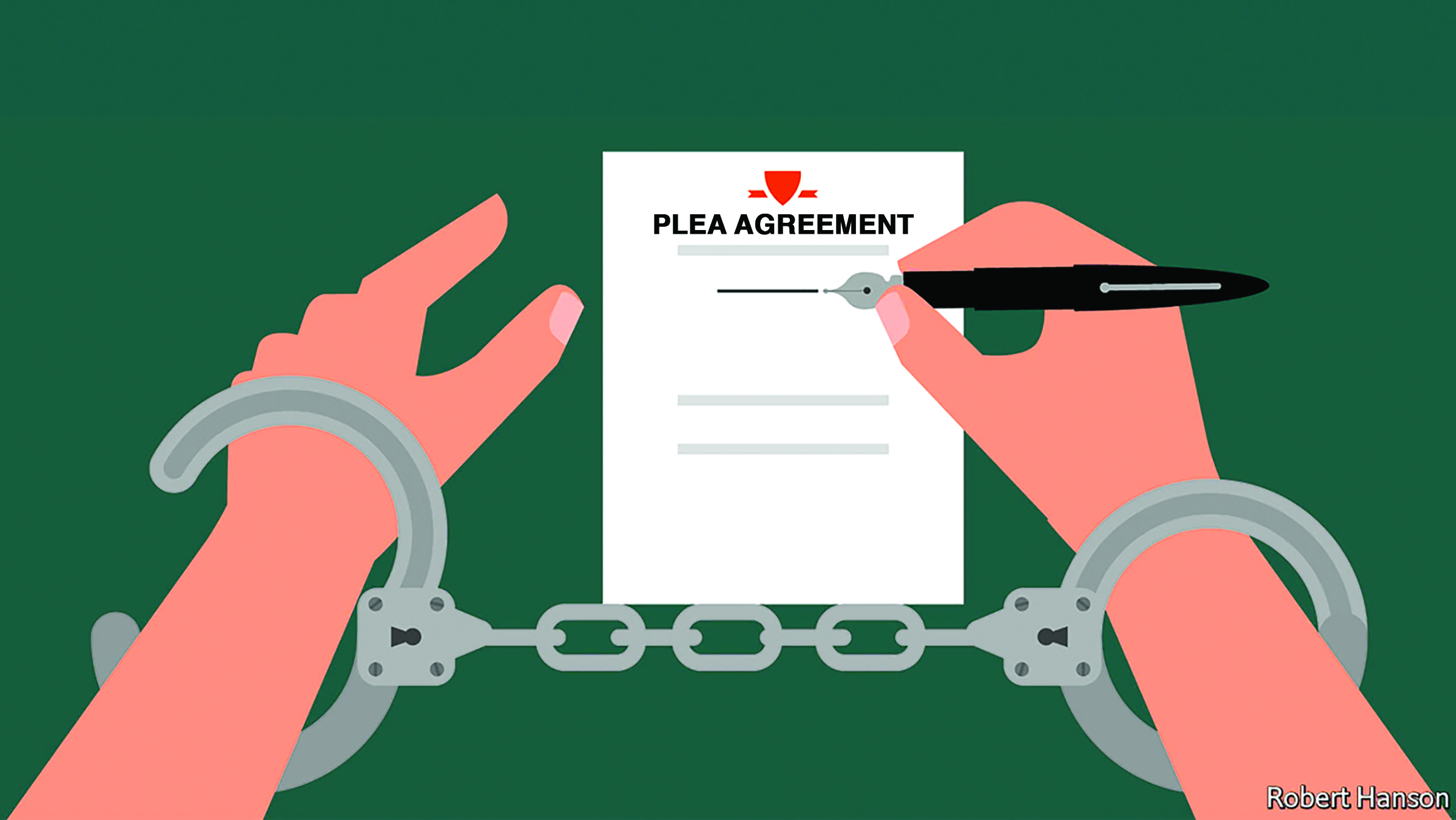
Wth no institution in Pakistan being perfect, the inconvenience caused by the inefficiency of NAB to corrupt politicians and others - who have made crores of Pakistanis suffer immensely - should be treated as a minor retribution for their crimes. Meantime, efforts must be made to improve NAB qualitatively and not just quantitatively by increasing the number of NAB courts. Though definitely not ideal, yet considering the constraints, reasonable plea-bargains mechanisms should be put in place as a simpler and quicker alternative. ![]()
The writer is a free-lance contributor with interest in regional, South Asian and international affairs. He can be reached at hashmi_srh@hotmail.com |
|
Cover Story
|
|
Special Editorial Feature
|
|
News Buzz
|
Update |


Leave a Reply