



It is always a combustible situation when the cricket teams of Pakistan and India face each other. The tension rises as cricket fans from both sides engage in a game of mind over social media. The media in both countries adds fuel to the fire by inviting former cricketers, commentators, and analysts to discuss what could or might happen. Whether it is an ODI, a Test series, the Asia Cup, or a World Cup, Pakistan vs. India matches always create hype and attract global attention.
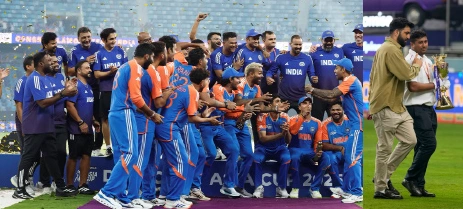
India’s victory over Pakistan by seven wickets in the group match at the recently held Asia Cup 2025 in Dubai, UAE, and later by five wickets in the final, gave Indian T20 skipper Suryakumar Ashok Yadav and his team the chance to look down upon the performance of Pakistani captain Salman Ali Agha and his men in green.
Streets across India were filled with cheering fans waving flags, and sweets were distributed; social media was flooded with patriotic chants. However, behind the cheers and celebrations, neutral observers were compelled to ask: has cricket turned into a tool of political posturing and patriotic theatre?
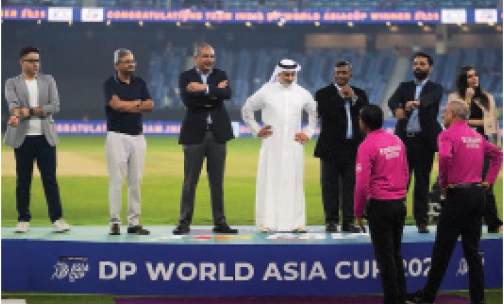
The Asia Cup final was played amid rising political tension. In April 2025, a terrorist attack in Pahalgam in Indian-occupied Kashmir caused anger and sorrow across India. When the Indian team lifted the Asia Cup trophy, captain Suryakumar Yadav dedicated the win to the soldiers and victims of that attack.
The moment, though emotional, added a political tone to the celebration. What should have been a sporting victory became a symbolic national event. The Indian team refused to take the trophy from Pakistani official Syed Mohsin Raza Naqvi, who is also the President of the Asian Cricket Council and Chairman of the Pakistan Cricket Board (PCB). There was no post-match handshake between the teams—an act that traditionally signifies sportsmanship and mutual respect.
Former Indian cricketer Harbhajan Singh called the win “a national celebration,” showing how deeply both fans and players tie the game to national pride. Celebrities, actors, and even politicians joined the wave of jubilation, calling the victory a tribute to the nation rather than just a sporting success.
Thanks to India’s abrasive demeanour, the idea that cricket is a gentleman’s game often fades when India and Pakistan meet on the field. What should be a display of sportsmanship turns into a charged battle of pride, emotion, and politics. Over the years, players from both sides have exchanged harsh words and gestures during matches, breaking the spirit of respect the sport is known for.
One such moment occurred during the 1997 ODI match in Toronto, when Pakistani batsman Inzamam-ul-Haq, fielding at the boundary, was mocked by Indian fans who called him “aaloo” (potato). Inzamam stormed into the stands to confront the heckler—a shocking act that stunned the cricketing world.


Based in Karachi, the author is a novelist and science fiction writer. He has a special interest in the social and political affairs of South Asia and can be reached at omariftikhar82@gmail.com
Leave a Reply