



In present-day Bangladesh, moments of genuine consensus are rare and fleeting. For decades, the nation has been locked in a bitter, often violent, duopoly between the Awami League (AL) and the Bangladesh Nationalist Party (BNP). This confrontational politics hindered development, eroded institutions, and left the layman yearning for a fundamental reset. The July National Charter 2025 emerged against this backdrop of chronic instability.
The charter is a bold, yet precarious, blueprint for national renewal, aiming to dismantle the very structures of partisan politics that have plagued the state for decades. However, the success of this charter hinges on navigating a minefield of historical precedent, major party boycotts, and internal dissent. For international observers and Bangladeshis alike, the charter represents the most significant test of the nation’s democratic resilience in a generation.
The rationale behind the July National Charter is rooted in a collective national frustration with Bangladesh’s perpetual political status quo. For decades, elections in Bangladesh have been less about democratic choice and more about a winner-takes-all conquest. Elections often resulted in widespread allegations of rigging by the state apparatus, which was overly submissive to the ruling party. The July Charter is a direct response to this systematic failure. It is not merely a political agreement but a moral covenant, framed as a tribute to the millions who participated in the July Revolution.
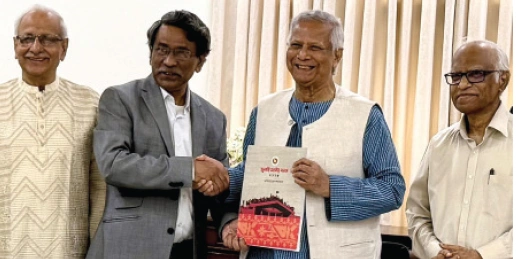
The July Charter’s draft was released on 28 July 2025, following consultations between 30 political parties and the interim government of Muhammad Yunus. The objectives of the 28-point draft are sweeping: to ensure political stability through guaranteed free and fair elections, to institute better governance by depoliticizing the civil service and law enforcement, to enact fundamental administrative and constitutional reforms, and to re-establish the rule of law. The charter aims to move reform from the realm of political promises into a reality. It also seeks to constitutionally recognize the 2024 uprising, anchoring its legitimacy in the will of the people rather than the agenda of any single party.
Yet, skepticism is not only natural but also historically justified. The 1990 mass uprising that ousted military dictator Hossain Mohammad Ershad led to a similar “consensus” for a neutral caretaker government (CTG) for overseeing elections. While initially successful, the CTG was ultimately scrapped by the Awami League. The 2007 military-backed caretaker government also attempted deep reforms, including a drive to create a “new brand of politicians,” but it became mired in allegations of overreach and selective corruption.
The July National Charter of 2025 aims to rectify past mistakes by promoting greater inclusivity. It was led by a special commission that brought together 30 different groups, out of which 25 signed the charter, creating a much broader agreement compared to the past.
Second, it tackles the whole system. Previous plans only focused on elections. The July Charter also aims to reform the courts, the civil service, the police, and anti-corruption agencies. It sets a strict two-year deadline for these changes, aiming to make them permanent before the old system can regain its footing.
Despite its ambitious plan, the charter has one major weakness: it doesn’t include the country’s most powerful political party, the Awami League, which was in power before the revolution, and has not signed it. Since changing the constitution requires broad agreement, the AL’s support is essential. Without it, the charter’s most significant changes may never come to fruition.


The writer is a freelancer and an investment banker based in Karachi. He can be reached at syedatifshamim@hotmail.com
Leave a Reply