



The ancient Greek historian Thucydides once remarked that “the strong do what they can and the weak suffer what they must.” Yet in the rugged corridor that we today call the Pakistan-Afghanistan frontier, strength and weakness have never been straightforward binaries. Empires marched in as masters and limped out as mendicants. Kings claimed supremacy, only to discover that tribal loyalties and mountain laws rarely bowed to imperial cartography. And in the twenty-first century, two Muslim neighbouring nations—Pakistan and Afghanistan—find themselves entangled in a script that feels eerily familiar, as if history itself refuses to retire from this battlefield.
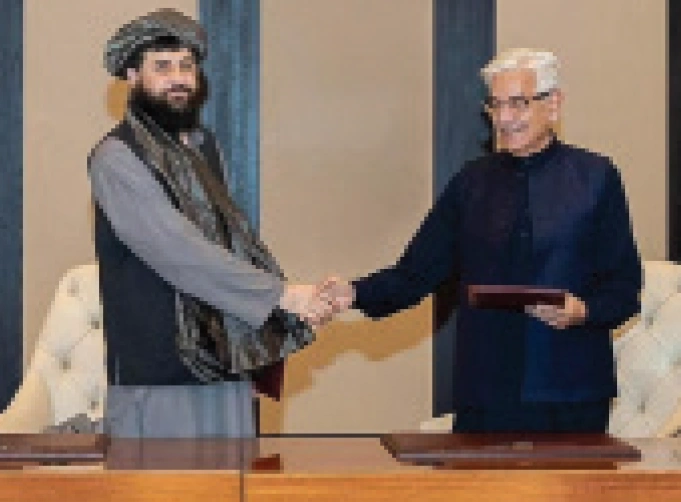
The Istanbul talks between Pakistan and the Afghan Taliban concluded recently with an atmosphere best described as one of frosted politeness—cordiality on paper, but with chill winds underneath. No breakthrough emerged, no roadmap materialised, and the core Pakistani concern—ironclad guarantees against terrorism emanating from Afghan soil—remains as unresolved as ever. As Pakistan faces a surge of deadly attacks from groups like the Tehreek-e-Taliban Pakistan (TTP) and Balochistan Liberation Army (BLA), Kabul’s reluctance to offer binding commitments has raised profound anxieties in Islamabad.
The question haunting policymakers is stark: Will the fragile ceasefire hold, or are Pakistan and Afghanistan inching, however reluctantly, towards an open confrontation? To answer that, one must look backward before peering forward. In our region, history is not a distant museum—it is the backstage crew still pulling the strings of today’s drama.
A Frontier Built on Fissures
The lands west of the Indus have long been a theatre of blurred lines—between empire and tribe, state and non-state, ally and adversary. When Ahmad Shah Abdali rode eastward in the 18th century, the frontier was not a border but a cultural thoroughfare, a corridor of shared kinship. Yet imperial rivalries transformed it into a buffer zone. The British, wary of Russian advances, engineered the Durand Line in 1893—an arbitrary demarcation that sliced through tribes, families, and pasture routes.
The Afghans, to this day, regard it with suspicion; Pakistan, like every lawful successor state, treats it as an international boundary. This disagreement—never theatrically loud yet chronically simmering—has shaped the logic of Pakistani-Afghan relations for decades. Even the legendary Amir Abdur Rahman Khan is said to have quipped that the frontier was a “line drawn on water,” acknowledging its inherent contestability.
Over the decades, miscalculations have piled like geological layers. When the Soviets invaded Afghanistan in 1979, Pakistan opened its borders to refugees and freedom fighters alike, becoming the trench line of the anti-Soviet jihad. The world celebrated Afghan bravery, but Pakistan bore the unintended blowback. Arms, militancy, sectarianism, drugs, and foreign intelligence networks seeped into the soil. The Afghan civil war of the 1990s, followed by the 2001 US invasion, ensured that instability became a chronic neighbour, not a passing disturbance.
Pakistan’s tragedy—unfolding for nearly four decades—has been that the fires of Afghanistan have repeatedly leapt across the Durand Line. And today, with the resurgence of the Taliban in Kabul, an old dilemma has resurfaced: Is Kabul willing—and able—to rein in anti-Pakistan militants operating on its soil?
The Istanbul engagement between Pakistan and Afghanistan was meant to be a quiet, practical dialogue—a chance to reset relations amidst escalating tensions and spiralling terrorist attacks. Yet the talks quickly became entangled in a diplomatic maze.
Pakistan’s position was clear, rational, and rooted in lived experience: Kabul must prevent TTP and BLA militants from using Afghan territory to orchestrate attacks on Pakistan. This is not a novel request; it is precisely what the Taliban themselves demanded from the US and the former Afghan government. The Doha Agreement placed similar obligations on the Taliban: no Afghan soil should be used by groups targeting other states.
But Kabul’s response in Istanbul fell short of anything resembling a binding pledge. Civilian statements offered polite assurances, but behind closed doors, Afghan leaders insisted that the TTP issue was “internal” to Pakistan, or that fighters hiding in Afghan provinces were merely “refugees.” This linguistic camouflage—familiar from past Taliban strategies—may be tactically clever but strategically self-defeating.
Pakistan has been firm: terrorism is not a semantic puzzle. When militants cross the border to attack Pakistani civilians and soldiers, the distinction between “refugee” and “fighter” collapses. Words cannot substitute for action.


Based in Lahore, the writer is a historian and a critical analyst. He can be reached at arslan9h@gmail.com
Leave a Reply