



 As you sow, so shall you reap, the most common proverb we all know since our childhoods, proves itself a universal reality, time and again. The International Crimes Tribunal in Bangladesh has sentenced Sheikh Hasina to death for “crimes against humanity” in a case related to her government’s crackdown on protesters, killing about 1,400 people, primarily students. Sheikh Hasina has been in India since she was ousted from power in August 2024, and the verdict in the case was announced in her absence.
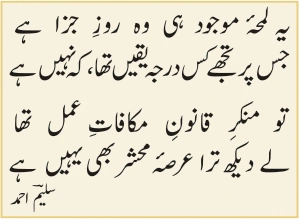 In 1975, Sheikh Mujibur Rahman, Bangladesh’s founding president, was killed along with all his family members, while Hasina Wajed was out of the country. When she returned home, she gained control of the Awami League. When Hasina came to power for the second time in 2009, she ruled the country with an iron fist. During her fifteen-year rule, Dhaka’s relations with Islamabad grew cold, and Bangladesh became a ‘proxy’ of India. Nevertheless, Bangladesh achieved unprecedented economic development during Hasina’s rule. However, she began using her government’s achievements to promote herself and her father. Nepotism at its best, Hasina’s relatives started being appointed to key positions in all key state institutions, including the judiciary and the army. To reward party members, a special quota was set for government jobs for the children of those who had sacrificed in the so-called liberation war. An ‘International Crimes Tribunal,’ composed of government-appointed judges, was set up to try such elderly people on charges like ‘treason’ and ‘anti-nationalism,’ but the underlying motive was to target political opponents. In response to these vengeful actions of Hasina Wajed, the first public movement was launched in 2013, which was crushed by allowing state institutions to use force against the protesters without any restraint. Hasina Wajed managed to maintain continuous control over the country by crushing the wishes and aspirations of the people through successive controversial elections. All political parties boycotted the January 2024 elections in protest against this government policy. Hasina Wajed, ignoring this protest with contempt, established a three-fourths majority in the House by bringing together independent members. As a result, the parliament was hostage, the Opposition was inactive, and a ‘one-party system’ was established in the country.
A decisive student movement began in July 2024 to abolish the quota reserved for the so-called ‘heroes’ of the liberation war. This time too, the Hasina-led government adopted the strategy of crushing public protests with batons, imprisonment and direct firing on protesters. Hasina Wajed, who considered her stronghold of power unassailable until a few weeks ago, was forced into humiliating exile. In the past year, times have changed so much that the ‘International Crimes Tribunal’ that she had set up to punish her opponents has now sentenced her to death. Ibn Khaldun, an Arab historian, sociologist, and philosopher, wrote in his treatise that a ruler does not have to be intelligent, but rather compassionate and forgiving. Known for her cruelty, arrogance and vengeful nature, Hasina could not be an exception.