



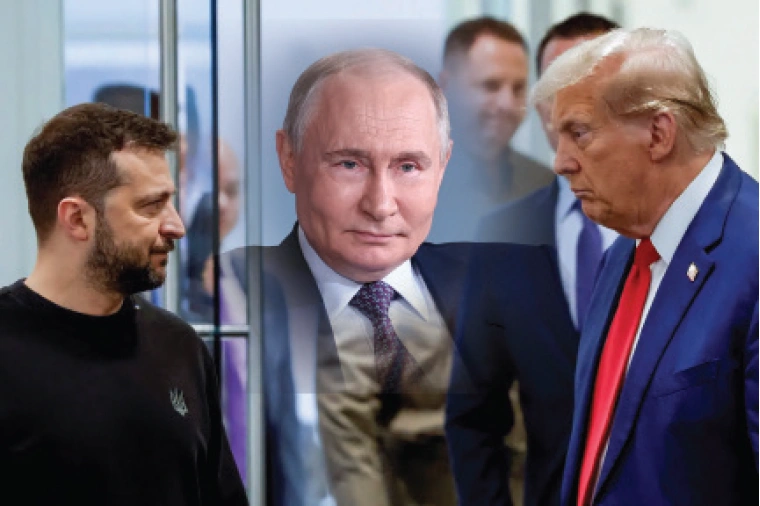
Fhe Russia–Ukraine war is one of the longest and deadliest military conflicts of the 21st century. It began in February 2022 when Russian forces, acting on the orders of Russian President Vladimir Putin, launched a full-scale invasion of Ukraine. They expected the country to fall quickly. Contrary to these expectations, the war has entered its fourth year, causing hundreds of thousands of casualties on both sides. While Ukrainian President Volodymyr Zelensky continues to urge the United States and EU countries for military and financial support, Russia currently holds the upper hand.
Since the war has extended far beyond its anticipated timeframe, it is necessary to analyse why Russia and the United States have failed to resolve the conflict. It is also crucial to examine the factors that have been hindering peace in the region and to identify measures that can help bring an end to this deadly conflict.
Russia attacked Ukraine for several reasons, the major one being Ukraine’s tilt towards the North Atlantic Treaty Organization (NATO), the world’s largest military alliance. Ukraine had expressed a strong desire to join NATO. Once admitted, the country would effectively bring the US-led alliance to Russia’s doorstep. Hence, it was natural for Russia to go to any lengths to prevent Ukraine from joining NATO and stop it from coming closer.
Additionally, President Zelensky was perceived as a pro-Western leader. Putin wanted a government in Kyiv that aligned with Moscow’s interests. Therefore, he sought to flex Russia’s military muscles to bring about regime change in Ukraine.
The war has largely persisted due to the influence of the US and its allies. Both the US and EU nations want Russia to accept defeat. They view the conflict as a test case for the security of Europe as a whole. In their view, if Ukraine falls and surrenders to Russia, it would signify a strategic defeat for European countries that consider Russia an adversary. This attitude has contributed to the deadlock.
The US and its allies have resorted to multiple measures to defeat Russia. They have extended military support to Ukraine and sanctioned Russia. They have sanctioned various Russian energy companies. Also, the US has put sanctions on bilateral trade with Russia. For instance, Trump started a trade war with India over the fact that India was importing Russian oil. However, sanctions have failed mainly as Russia has redirected its trade towards China, Iran, and other US adversaries.
However, Trump has expressed a desire to end the conflict, partly to strengthen his claim for the Nobel Peace Prize. In line with this intention, there has been a shift in US policy. Trump has stopped being generous in military support to Ukraine. He has also repeatedly blamed the Ukrainian president for the outbreak of the war. The public disputes between Zelensky and Trump illustrate this shift, with Trump even humiliating the Ukrainian leader on multiple occasions.
Furthermore, Trump has signalled to Russia that its key concerns would be addressed. He has ruled out the possibility of Ukraine joining NATO and has indicated that US troops would not be deployed in Ukraine.
While the US seems to have stepped back, EU nations have intensified their support for Ukraine. Several European countries have increased their military spending and provided greater assistance to Kyiv. Here is the same information rewritten in other words: The EU and its Member States have provided €66 billion in military aid to Ukraine. This amount includes €6.1 billion through the European Peace Facility, which is used to supply military equipment.
Moreover, the EU Military Assistance Mission for Ukraine, with a funding of €362 million, is addressing the training requirements of Ukraine’s armed forces and has trained 82,000 Ukrainian troops to date. They do not want Russia to win the war; in fact, they aim to bring Moscow to its knees.


Based in Larkana, Sindh, the writer is a freelance contributor and can be reached at sjatoi831@gmail.com
Leave a Reply