



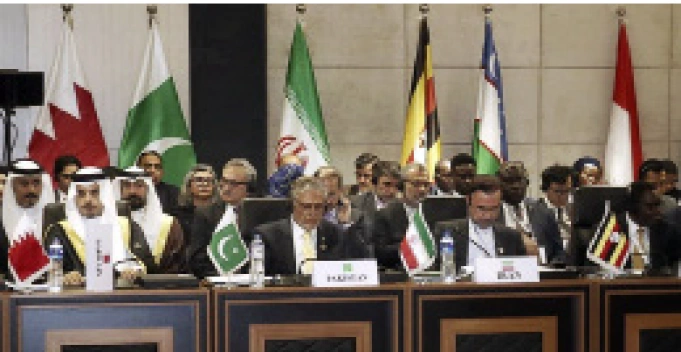
In 2025, the international theater of diplomacy hosted numerous shows around the world’s power corridors, and then some turfs of the emerging power hotspots. While most shows were mere optics, marking almost no change in the lives of the citizens of the world.
In this year-ender, in a year of high-profile summits, social media diplomacy, and performative politics, SouthAsia Magazine aims to explore whether global diplomacy has created a meaningful impact, or was it just a spectacle, frozen in time, to be framed and hung in the boardrooms and offices of the movers and shakers of the current era.
“I would say that, in the world of high-level diplomacy, 2025 is more “Optics” than “Outcomes” when it comes to international agreements. Many “agreements” reached this year are nothing more right now than promises on paper (such as the round of agreements Trump just reached with many Asian nations),” states Dr Paul Poast, Deputy Dean of Doctoral Education, Social Science Division and Associate Professor, Department of Political Science at the University of Chicago (UChicago).
Speaking to Dr Carlos Manuel Martin Gonzalez, Associate Professor in International Relations at Universidad Europea de Valencia (UEV) in Spain, SouthAsia Magazine enquired whether, in 2025, showcase diplomacy primarily served as a stage for political performance or was it used as an effective tool for resolving conflicts? “My perception is that showcase diplomacy has served as a stage for political performance by China and, since this year, the US. Meanwhile, the EU still tries to use it as an effective tool for resolving conflicts,” he mentions, adding that “traditional diplomacy is silent, working behind the scenes, only to reveal its results when the agreement is finalized and ready to be presented to the audience.
As for Dr Kenneth Holland, Adjunct Professor of Political Science at the University of Utah, “Effective diplomacy is always conducted behind (closed) doors,” that version that is conducted in public, “is always for show”, he notes.
The world witnessed the Sharm El-Sheikh Peace Summit, also known as the Gaza Peace Summit, where US President Donald Trump, along with leaders of Egypt, Qatar, and Türkiye, signed a declaration following negotiations in Egypt. During these negotiations, Hamas and Israel agreed on the first phase of a ceasefire aimed at bringing peace to Gaza. Not too long ago, President Trump hosted his Russian counterpart, President Vladimir Putin of Russia, at the 2025 Russia–United States summit, also known as the Alaska Summit. These summits, as part of a growing trend of summit diplomacy, are they of any substance or merely optics?
For Dr Gonzalez, the International Relations Professor from UEV in Spain, the citizens’ expanded access to information is why there is excessive scrutiny of these summits. “Once we have access to a large amount of daily information, our perception of our and others’ leaders/governments’ performance is under scrutiny. Noting the results in Central Asia and Southeast Asia from the Trump Administration, “it is clear that the time invested behind the scenes has been the most important factor,” he shares.
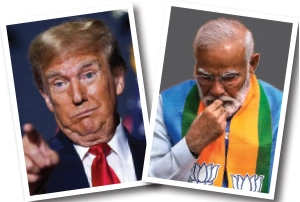 Speaking of the resolution of major conflicts for which the world leaders were seen convening at summits throughout the year, Dr Holland, Adjunct Professor of Political Science from Utah, states that “These conflicts can only be resolved if one side wins a decisive victory on the battlefield or a third party like the United States exerts irresistible economic or military pressure.”

The writer is a communications professional and a UN Volunteer. She can be reached at mariaamkahn@gmail.com
Leave a Reply