



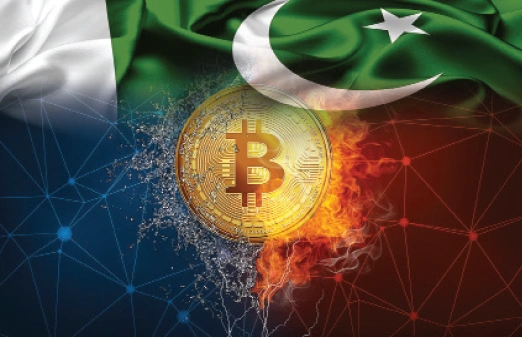
Pakistan has rapidly emerged as one of the most active cryptocurrency markets in the world, a development that has both excited investors and alarmed regulators. According to recent reports, the country now ranks third globally in retail crypto adoption, behind only India and the United States. Young, tech-savvy Pakistanis are increasingly turning to digital assets as a means of investment, speculation, and cross-border financial engagement, leveraging centralized platforms such as Binance as well as peer-to-peer exchanges.
Estimates suggest that Pakistan’s trading volume in cryptocurrencies potentially amounts to $20 billion to $30 billion, with an annual trading volume potentially reaching $300 billion, nearly equivalent to the country’s GDP. This explosive growth highlights the significant appetite for cryptocurrency among individuals, freelancers, and small businesses, and suggests the country’s vast untapped potential in the digital economy. As per some estimates, Pakistan could attract around $ 2 billion annually through successful financing initiatives linked to emerging sectors, such as climate investment and digital assets.
Yet, this rapid adoption has not come without risks. The combination of high pubic interest and limited regulation has created fertile ground for fraud and scams. Pakistani investors have fallen victim to phishing attacks, fake coin launches, impersonation schemes, and fraudulent investment groups. In many cases, victims report losing entire wallets after revealing their private seed phrases or investing in tokens that ultimately became unsellable. Experts note that much of this vulnerability stems from human error and a lack of awareness, as promises of rapid profits draw many users without a thorough understanding of the technology or verification of the platform’s legitimacy.
Regulatory gaps compound this situation. While the State Bank of Pakistan (SBP) issued a warning against digital assets in 2019, there was little formal oversight until recently. The launch of the Pakistan Virtual Assets Regulatory Authority (PVARA) in 2025, under the Virtual Assets Ordinance, marked the country’s first concrete regulatory step towards virtual assets. Alongside PVARA, the Pakistan Crypto Council (PCC) was established to integrate digital assets into the economy and drive business-oriented development. Pakistan’s Finance Ministry has emphasized that these moves are intended not just to regulate, but to harness cryptocurrency and blockchain technologies as tools for economic growth, financial innovation, and global competitiveness.
Despite these efforts, experts caution that cryptocurrencies themselves are not inherently fraudulent. The primary issues are a lack of oversight, inadequate investor education, and underdeveloped infrastructure. Specialists, including representatives from the Pakistan Banks Association, have stressed the need for a phased, carefully regulated approach that begins with the introduction of a central bank digital currency (CBDC) and regulated stablecoins. SBP has reportedly been working on a CBDC prototype since 2022, with technical support from both the IMF and the World Bank.
 However, there are challenges as cryptocurrencies remain volatile and speculative, and without proper regulatory oversight, over-reliance could destabilize Pakistan’s fragile economy. Fraud, scams, and cybersecurity vulnerabilities pose ongoing threats, particularly for inexperienced investors. Pakistan must carefully balance the promise of innovation with policy imperatives. This includes taxation, anti-money laundering and counter-terrorism financing compliance, monetary stability, and investor protection. Failure to address these areas could undermine public trust and expose citizens to financial exploitation.

Based in Islamabad, the writer is a senior research associate at the Sustainable Development Policy Institute (SDPI). He can be reached at asifjaved@sdpi.org
Leave a Reply